
streamlining access to company resources
cox enterprises [sponsored project]
Role
Tools
Members
Duration
PROBLEM STATEMENT
A team of 3 supports over 55,000 employees — every question they answer manually is time not spent on strategic, high-leverage work.
OUR SOLUTION
ai-powered search for quick and smart answers to common questions
guided pathways for personalized learning
quick links to resources for efficient learning
past success stories for employees to understand the value of hcd methods
ABOUT OUR SPONSOR
team of 3
01. hcd training & workshops
02. ux project consulting
03. university engagement
KEY CHALLENGES

01. lack of centralization
Resources are scattered across multiple platforms and intranets.

02. lack of intuitive navigation
Searching for HCD content is too overwhelming for employees.

03. lack of visibility
Awareness of the HCD program relies entirely on word-of-mouth.

04. lack of role-specific pathways
Current systems offer no tailored entry points for employees with different goals.
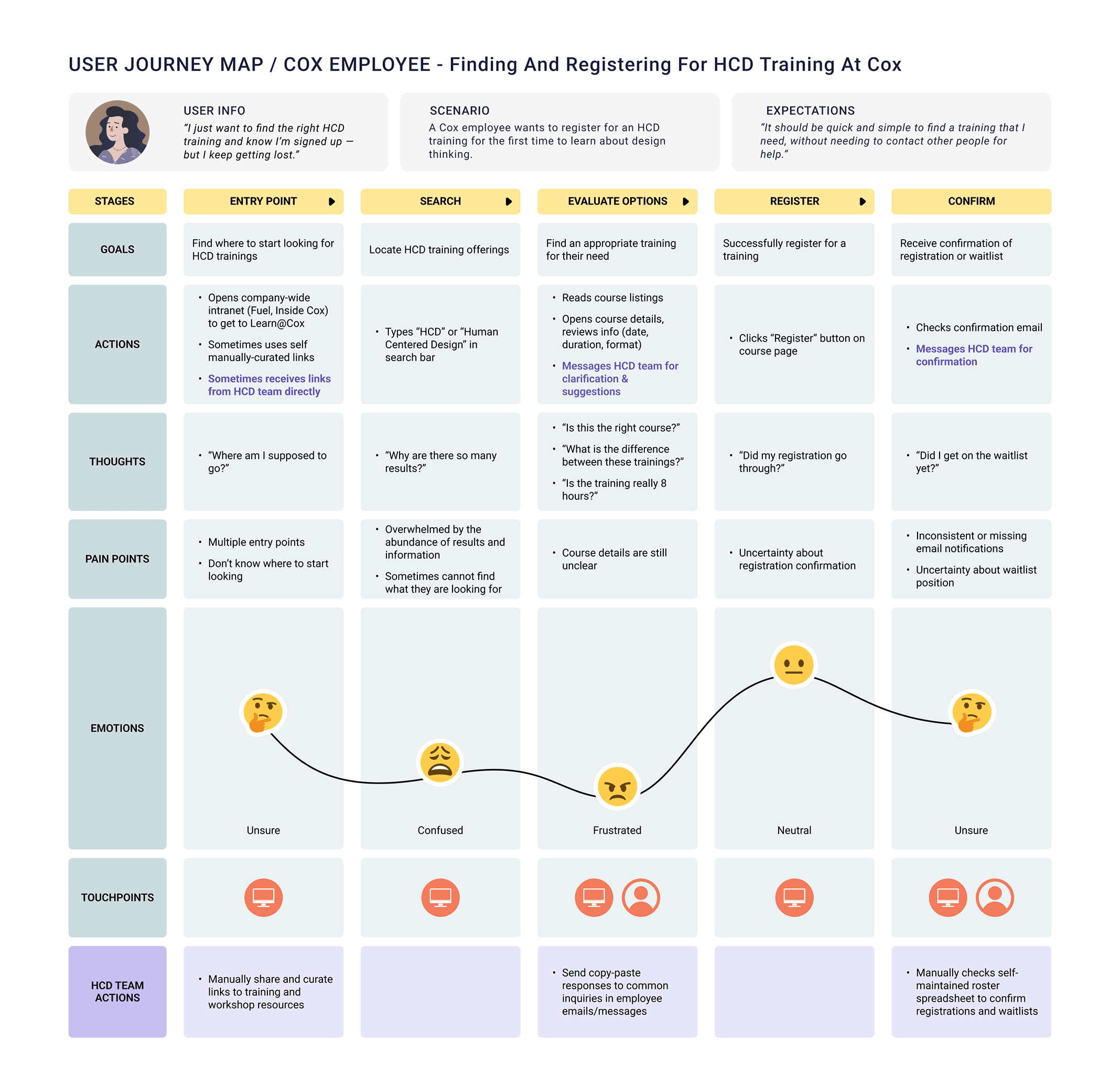
CURRENT FLOW

KEY PROBLEM
thousands of employees can't find HCD resources without asking the HCD team for help
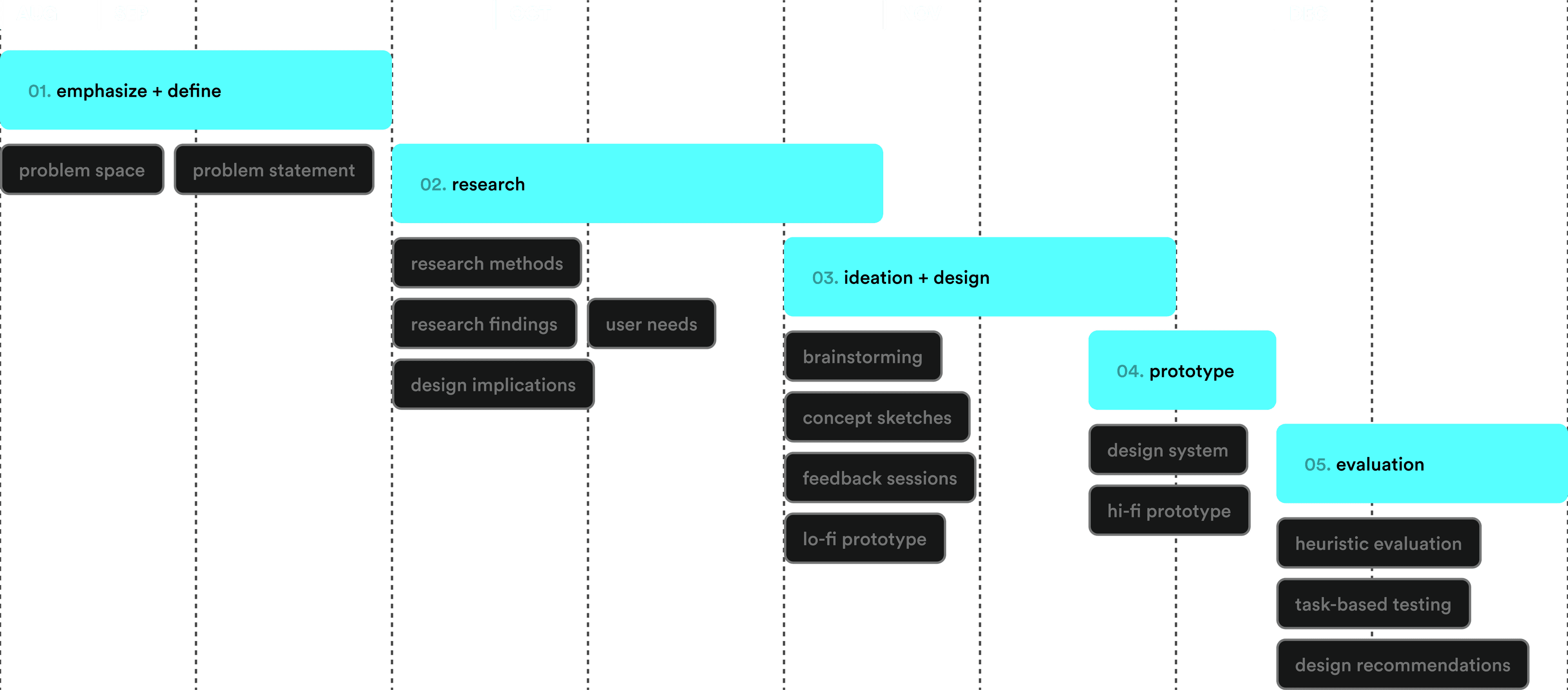
PROJECT TIMELINE
RESEARCH QUESTIONS
how do employees currently search for and access HCD resources?
what barriers do employees encounter during resource search?
how does the HCD team currently handle incoming requests?
what is the gap between how employees and HCD team members define resources?
what design patterns enable effective resource access and self-service?
RESEARCH METHODS
Tap a method below for the full breakdown.
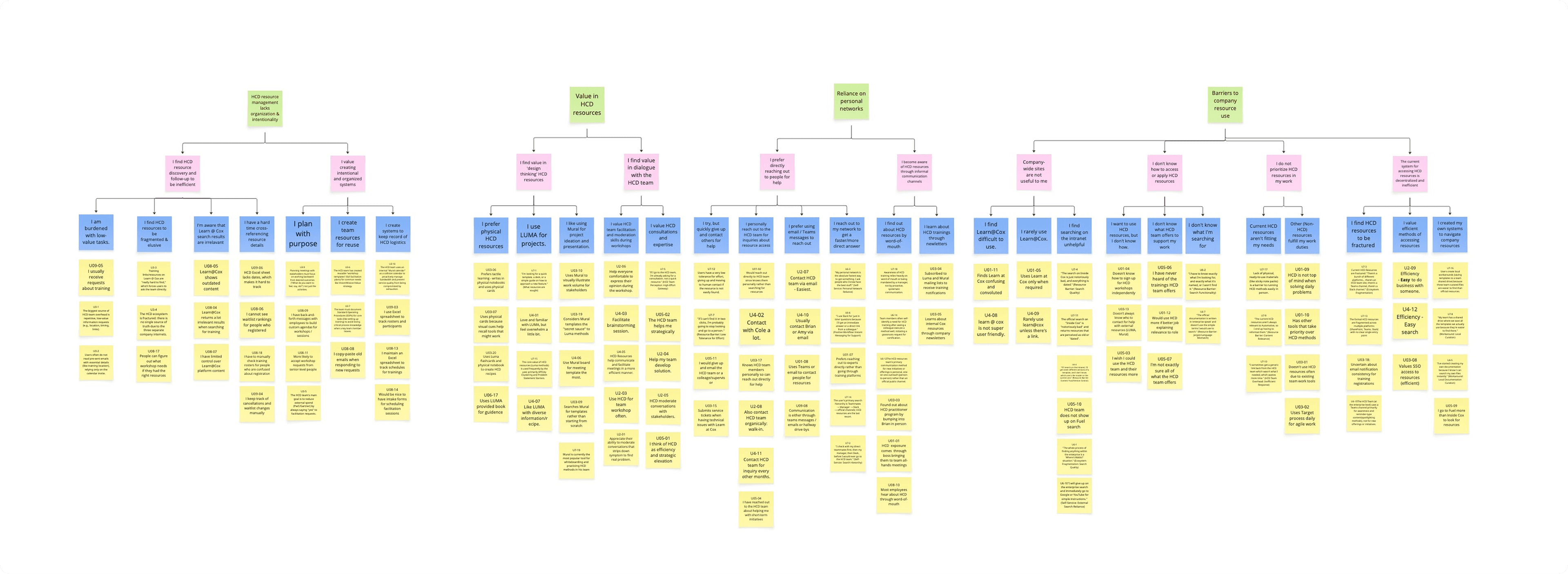
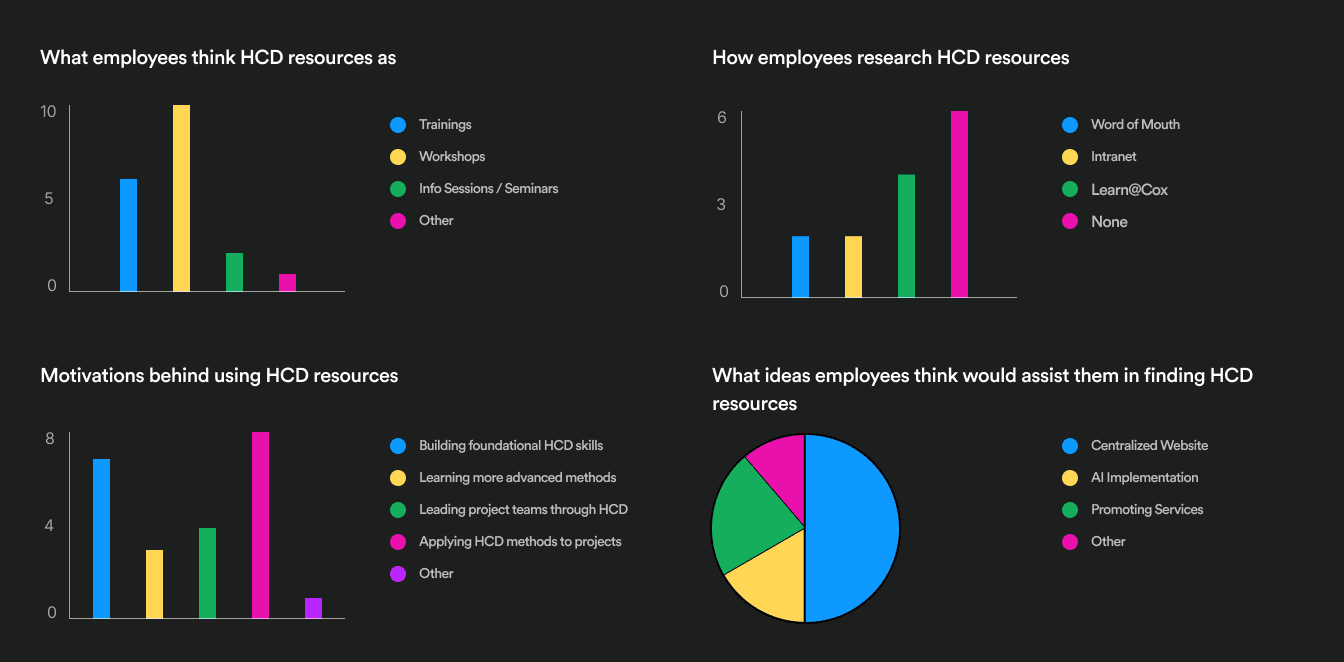
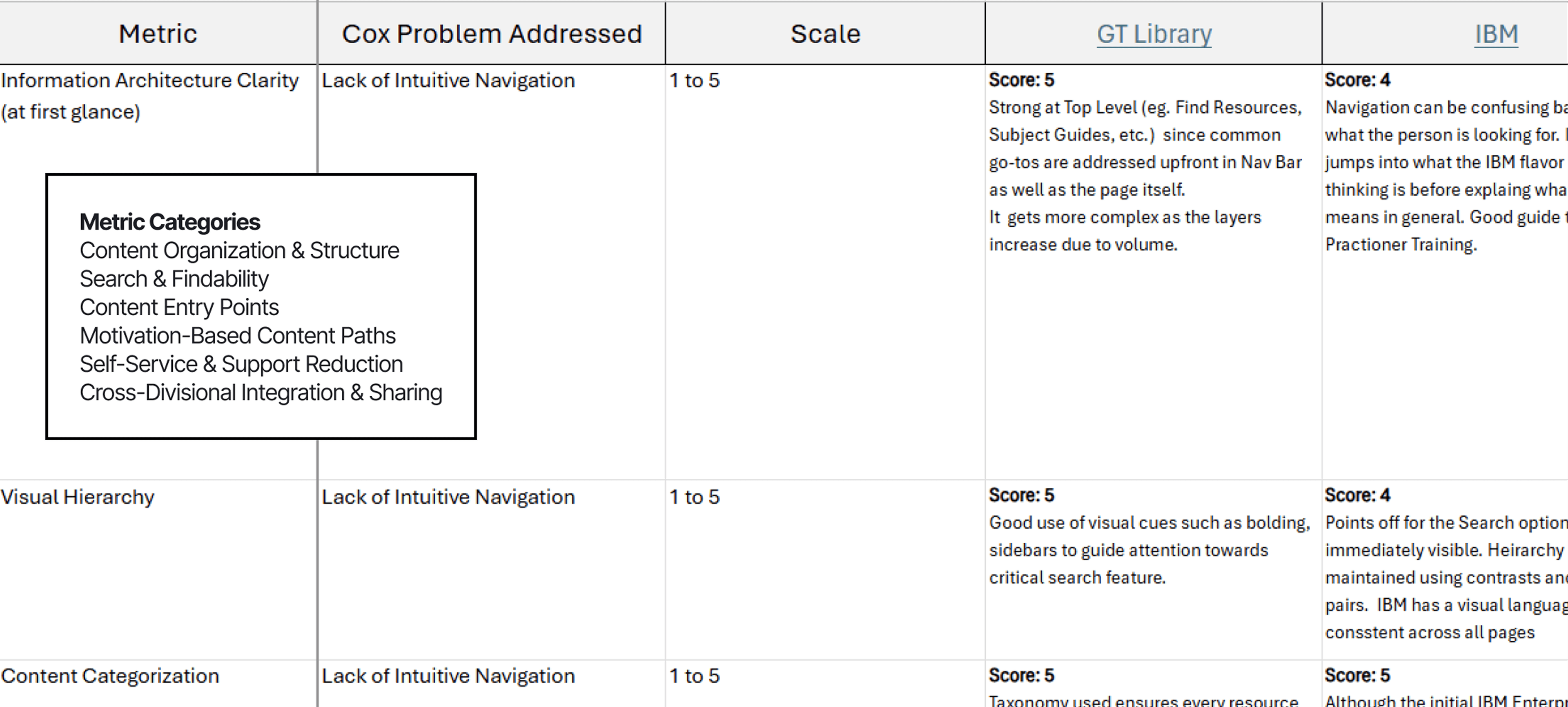
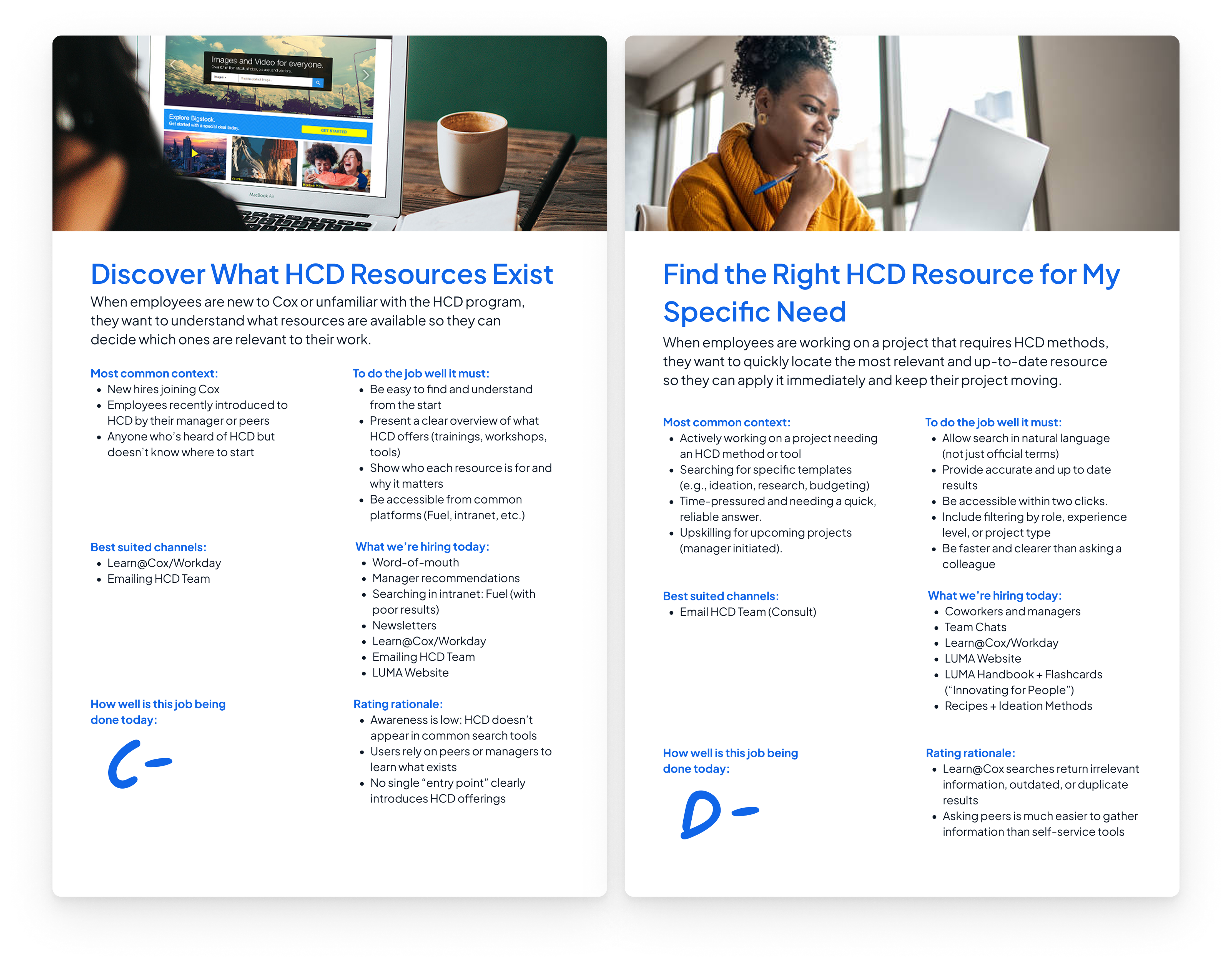
RESEARCH FINDINGS
USER NEEDS REPRESENTATION
IDEATION

01. centralized website
A single hub for trainings, templates, FAQs, and consulting support.

02. mascot AI agent
A conversational mascot that helps employees find HCD resources.

03. automated email responses
An HCD bot that answers common questions directly in email.
CHOSEN DESIGN DIRECTION
- Most feasible and impactful option given technical constraints
- AI search seen as highly valuable for improving how efficiently people find information
- Aligns with company's push for broader AI adoption

WIREFRAME ITERATION
FEATURE WALKTHROUGH
Hover over each image to see the whole page!
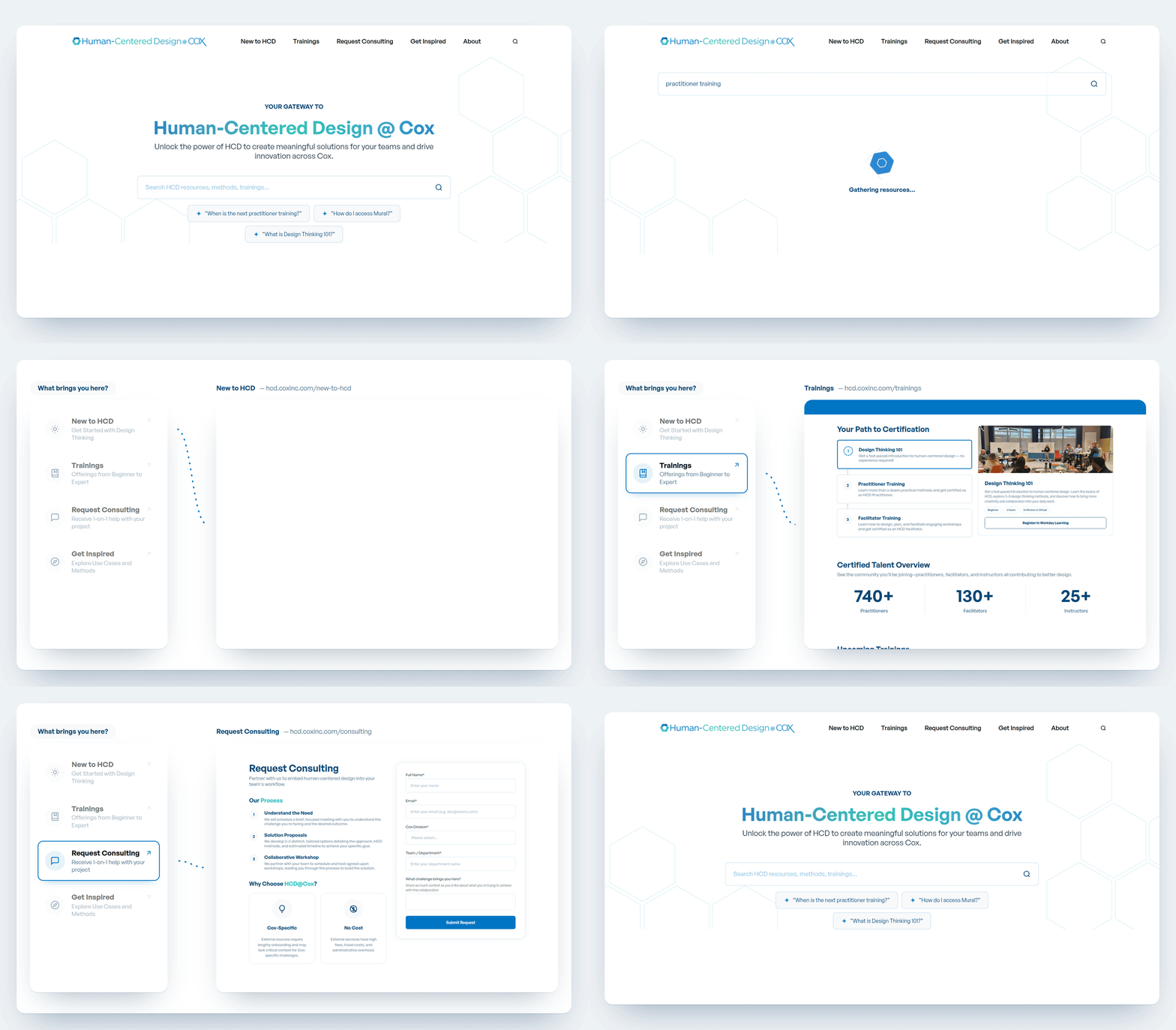
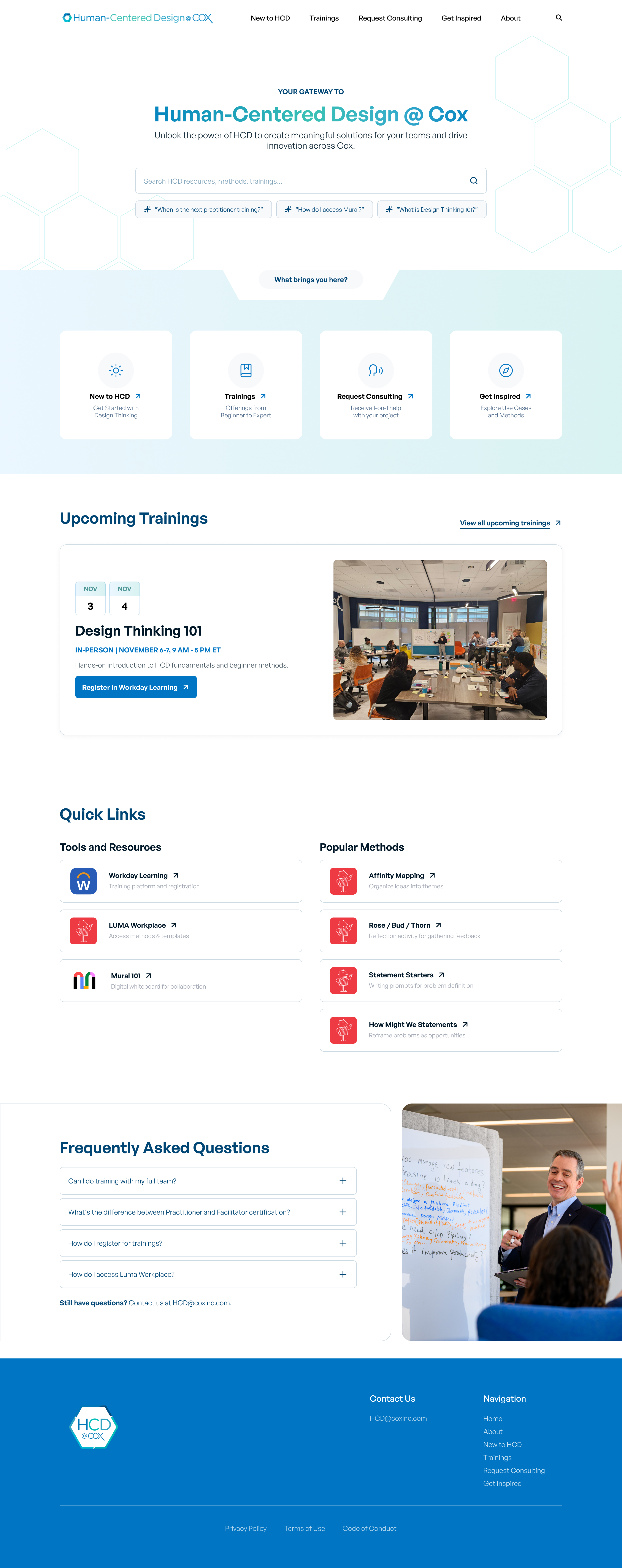
01 home page
The entry point for all employees. Features a built-in AI search bar, upcoming trainings, quick links to common resources, and frequently asked questions.
01 home page
The entry point for all employees. Features a built-in AI search bar, upcoming trainings, quick links to common resources, and frequently asked questions.
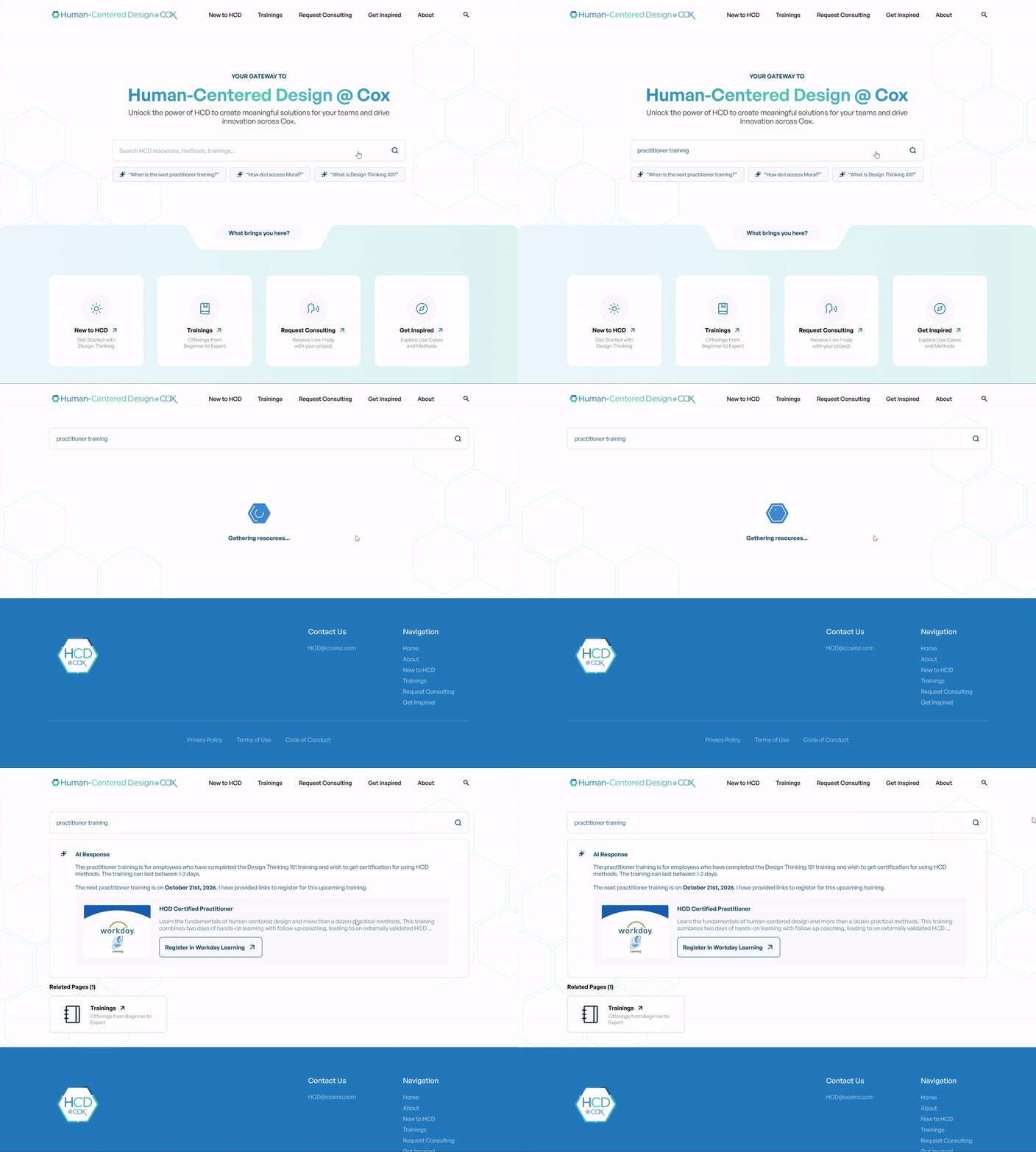
02 ai integrated search
A built-in AI search bar with suggested prompts to quickly surface answers to employee questions without having to navigate away.
02 ai integrated search
A built-in AI search bar with suggested prompts to quickly surface answers to employee questions without having to navigate away.
03 four motivation-based pathways
Four entry points tailored to different employee goals — whether they are new to HCD, looking to register for a training, need consulting support, or want to explore past success stories.
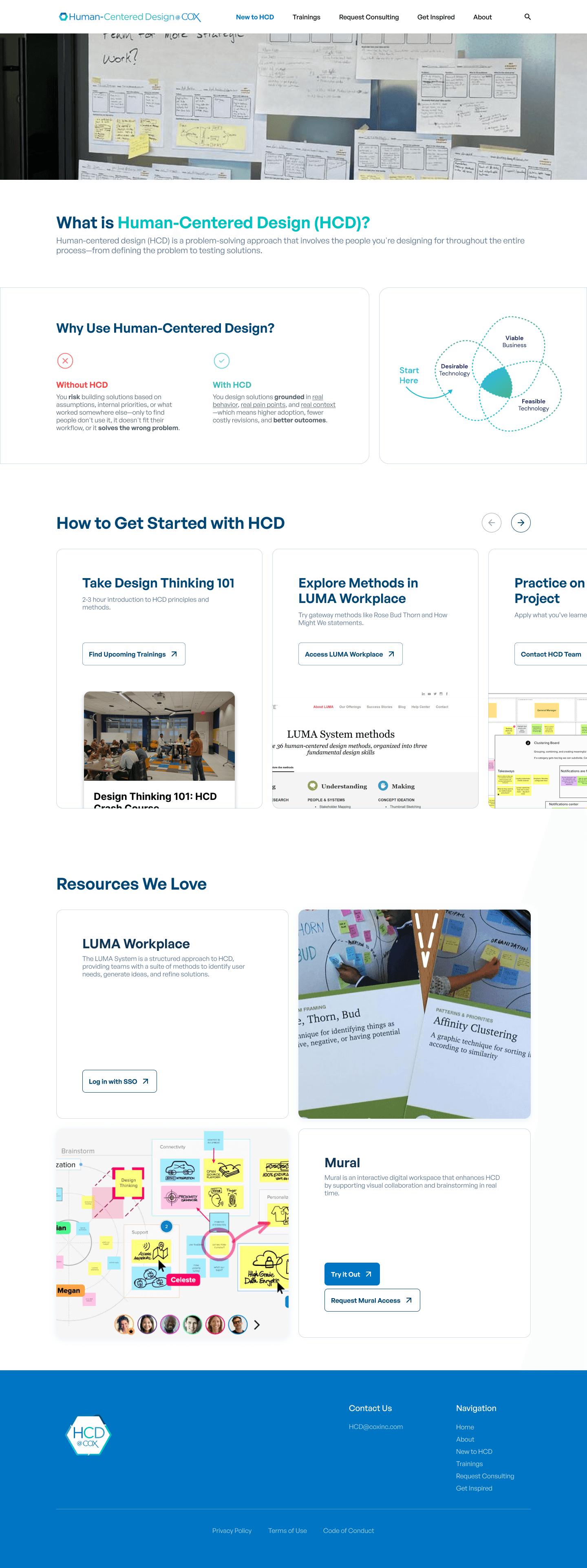
new to hcd
Created a "New to HCD" page to help employees unfamiliar with human-centered design understand what it is and how it can benefit them.
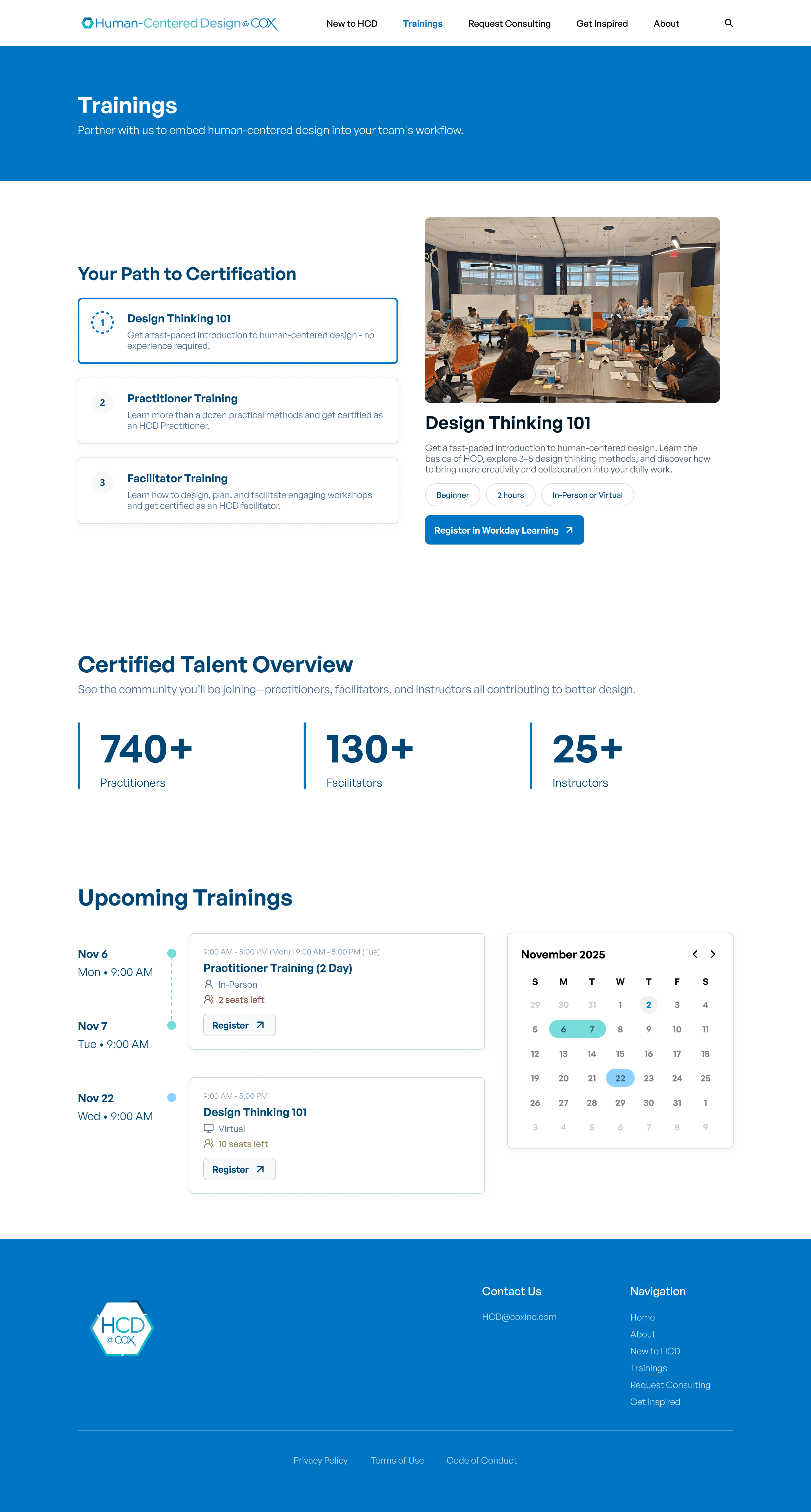
trainings
Features a certification timeline with details for each offering and a full calendar view of all upcoming trainings.
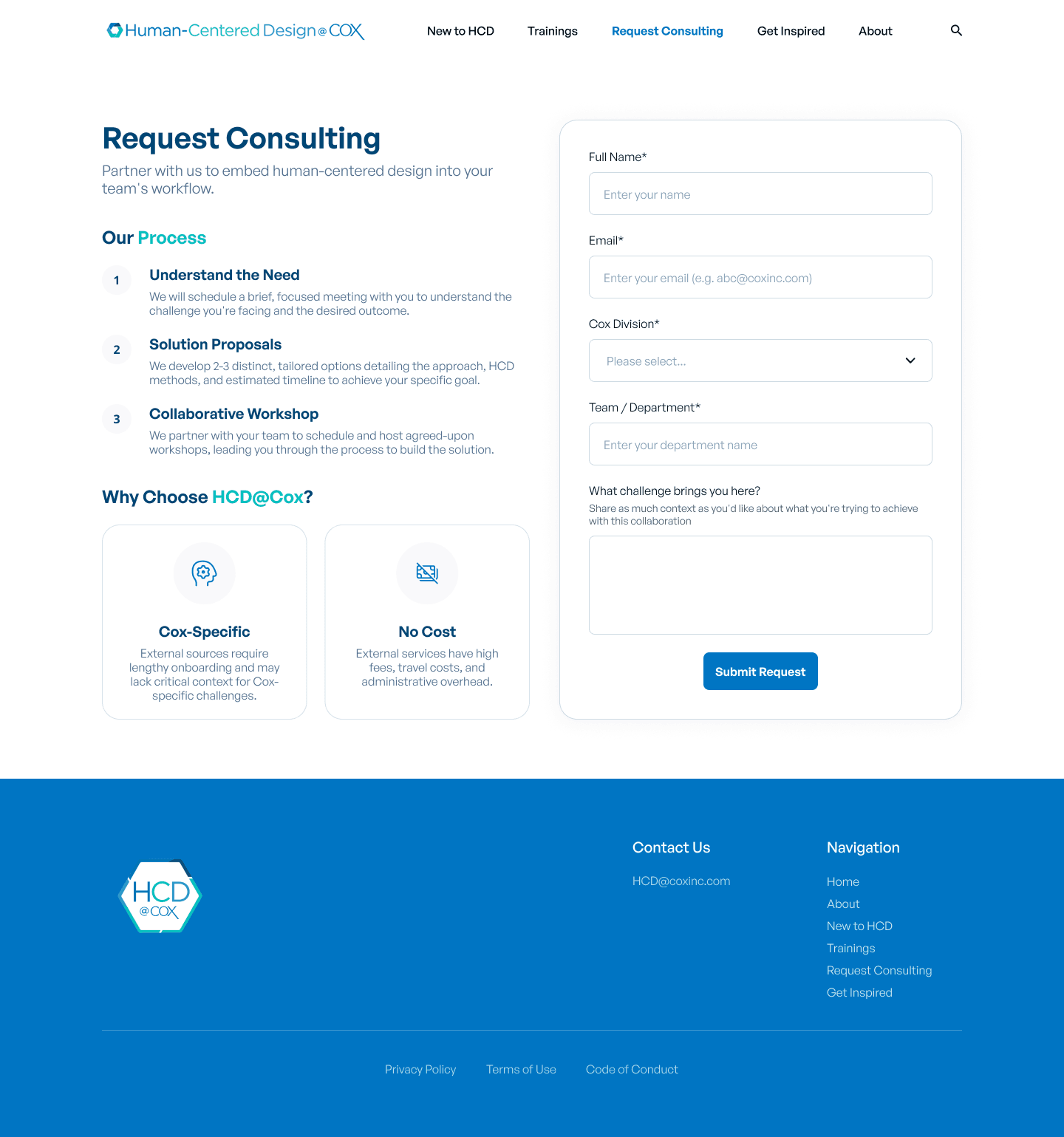
request consulting
Employees working on a project can request consulting with the HCD team through a simple form.
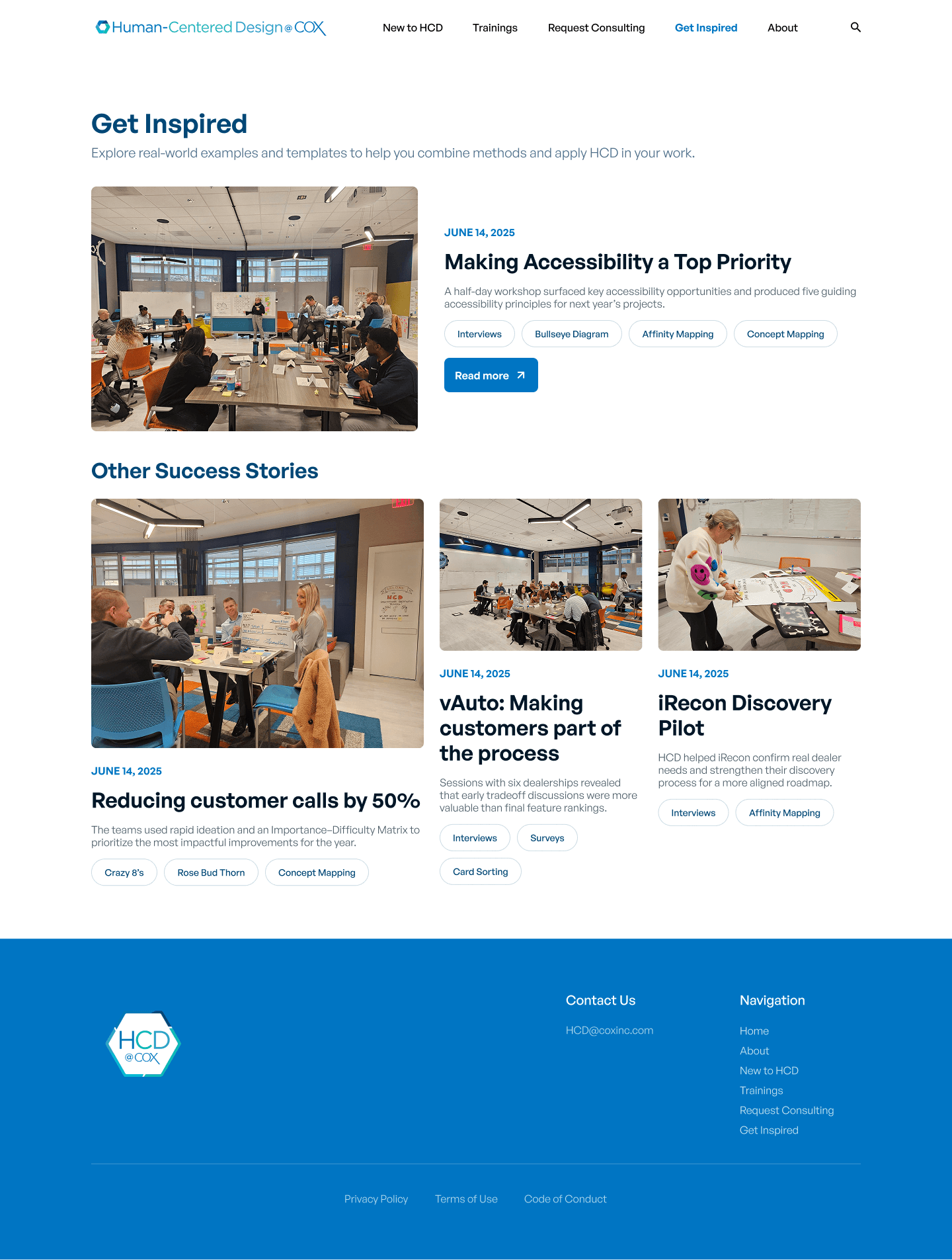
get inspired
Employees can read about successful projects that used HCD methods and explore the techniques they applied.
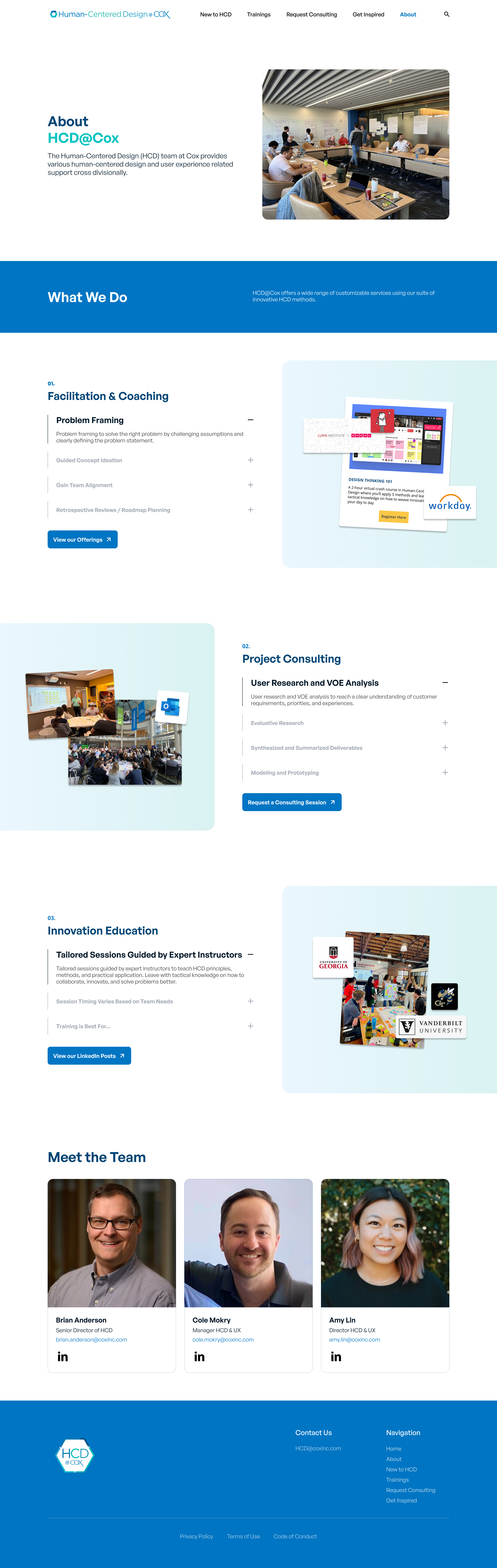
04 about page
Introduces the HCD team, what they do, and quick links to contact them for more information.
04 about page
Introduces the HCD team, what they do, and quick links to contact them for more information.
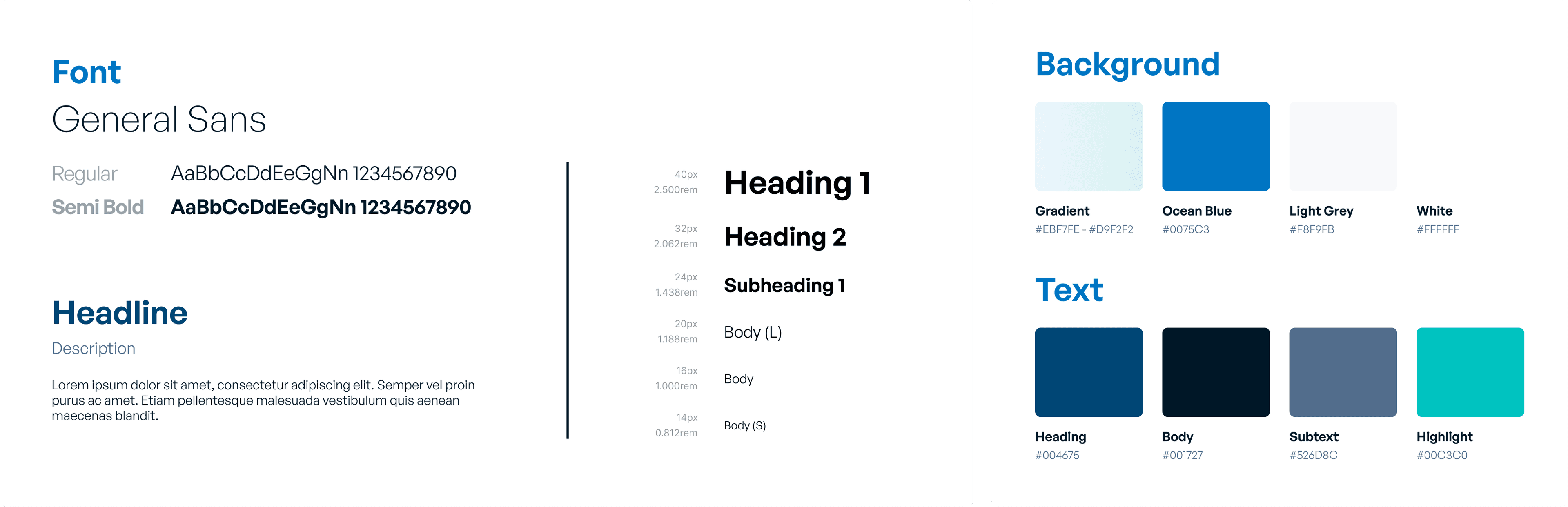
DESIGN SYSTEM
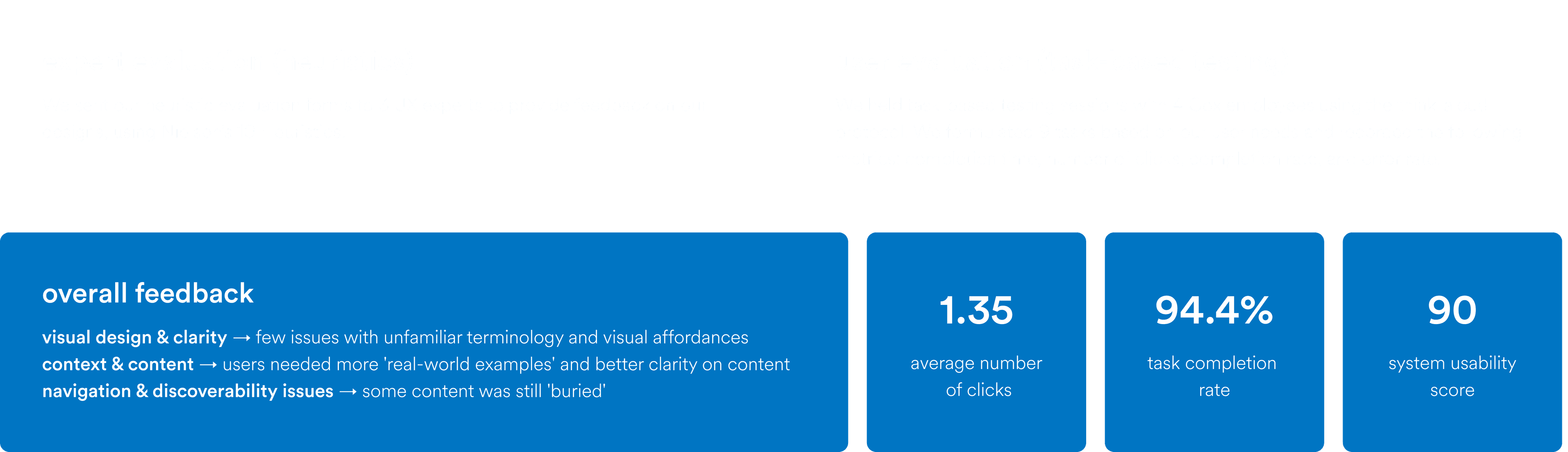
EVALUATION & TESTING
CONCLUSION
