
designing trust-first social discovery for concert-going
personal project
Role
Tools
Members
Duration
PROBLEM STATEMENT
Music streaming platforms like Spotify are optimized for individual discovery, but fall short when users want to connect socially through music. Students and young adults often want to attend concerts with others who share their taste, yet existing tools—Spotify Blends, Reddit threads, Facebook groups—are passive, unstructured, or unsafe. As a result, music sharing remains isolated, and many users skip concerts simply because they don't have someone to go with.
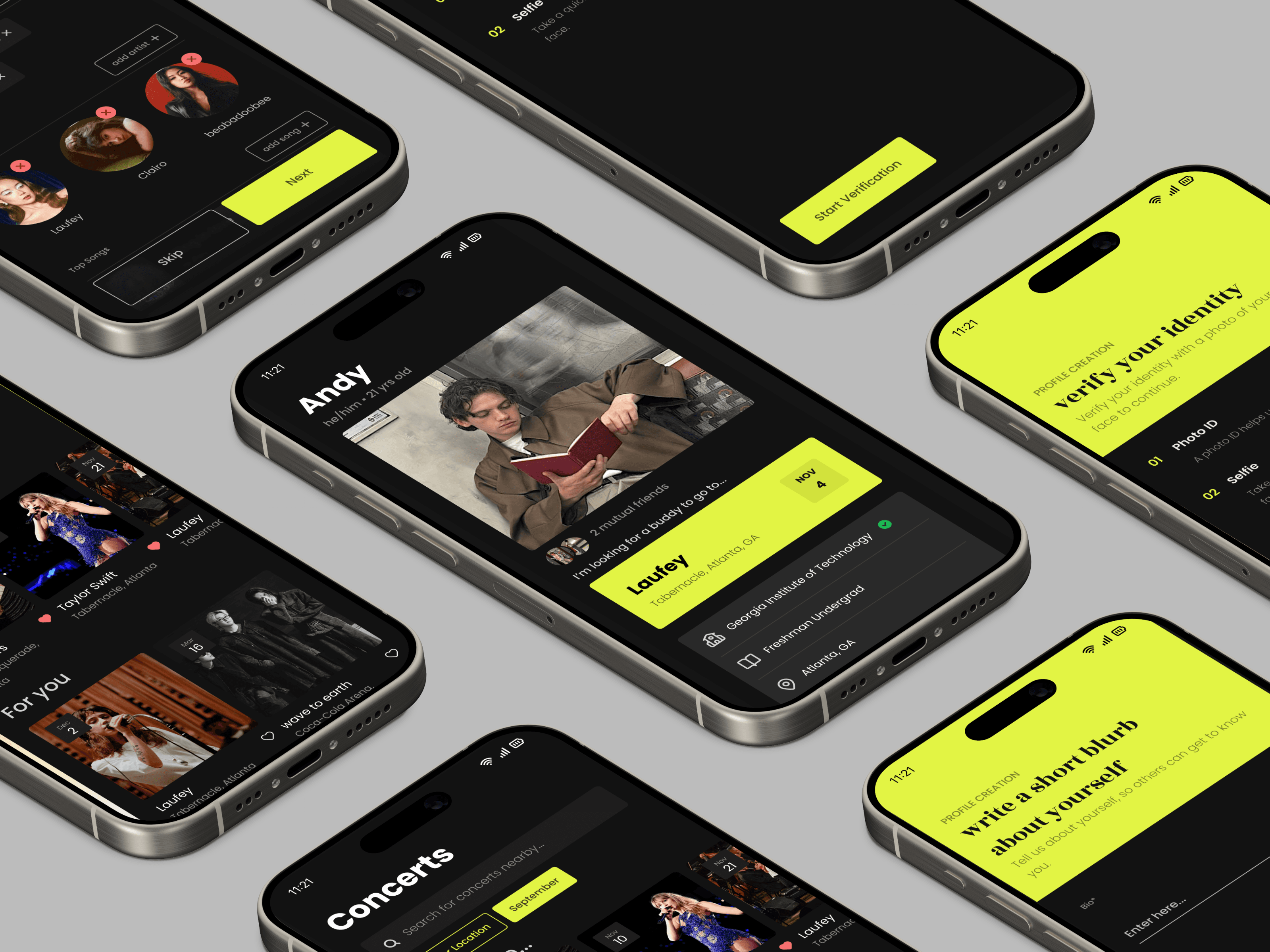
OUR SOLUTION
RESEARCH OVERVIEW
01. domain and competitive research
existing tools enable sharing, but not connection
We analyzed music streaming services (e.g. Spotify and Last.fm) and online meetup communities.

Key gaps identified
- Social features are passive and rarely used
- No built-in discussion or trust systems
- External platforms lack safety and structure
02. semi-structured interviews
music platforms are lacking in active features for socialization
We conducted 20+ interviews with college students and young adults aged 19–29.
Key findings identified
- Social features on music streaming platforms are limited
- Music platforms do not effectively help them meet new people
- Music taste is a strong connector between friends
KEY FINDING
passive social features in music apps don't enable meaningful new connections, only strengthen existing ones.
CHALLENGE
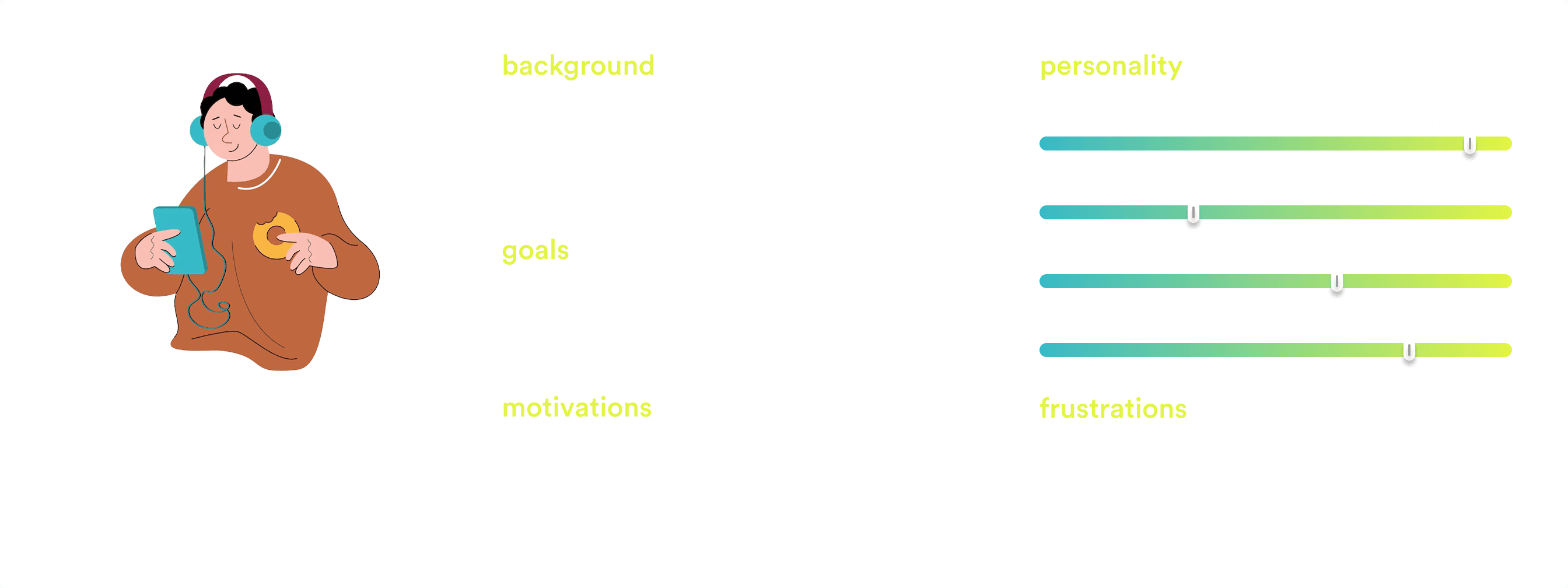
USER PERSONA
IDEATION

After conducting concept feedback sessions, we ultimately focused on a concert buddy matching system, where profiles, verification, and reviews help users evaluate compatibility safely. Users preferred this idea because it offers tangible utility rather than just being another passive feature in already existing music platforms. There is also no current app in the market space that focuses on music-based matching.
CHOSEN CONCEPT
our chosen concept: a concert buddy matching system

dating apps already tackle this problem!
Because our users expressed concerns about meeting strangers online, we looked at how successful apps—especially dating apps—handle trust and safety. These apps face similar challenges: enabling social connections while protecting users.

STORYBOARDING & WIREFRAMING
• Gave users control over what they share
• Ensured mutual consent before communication, via swipe-based matching
• Made verification and review features visible and intuitive
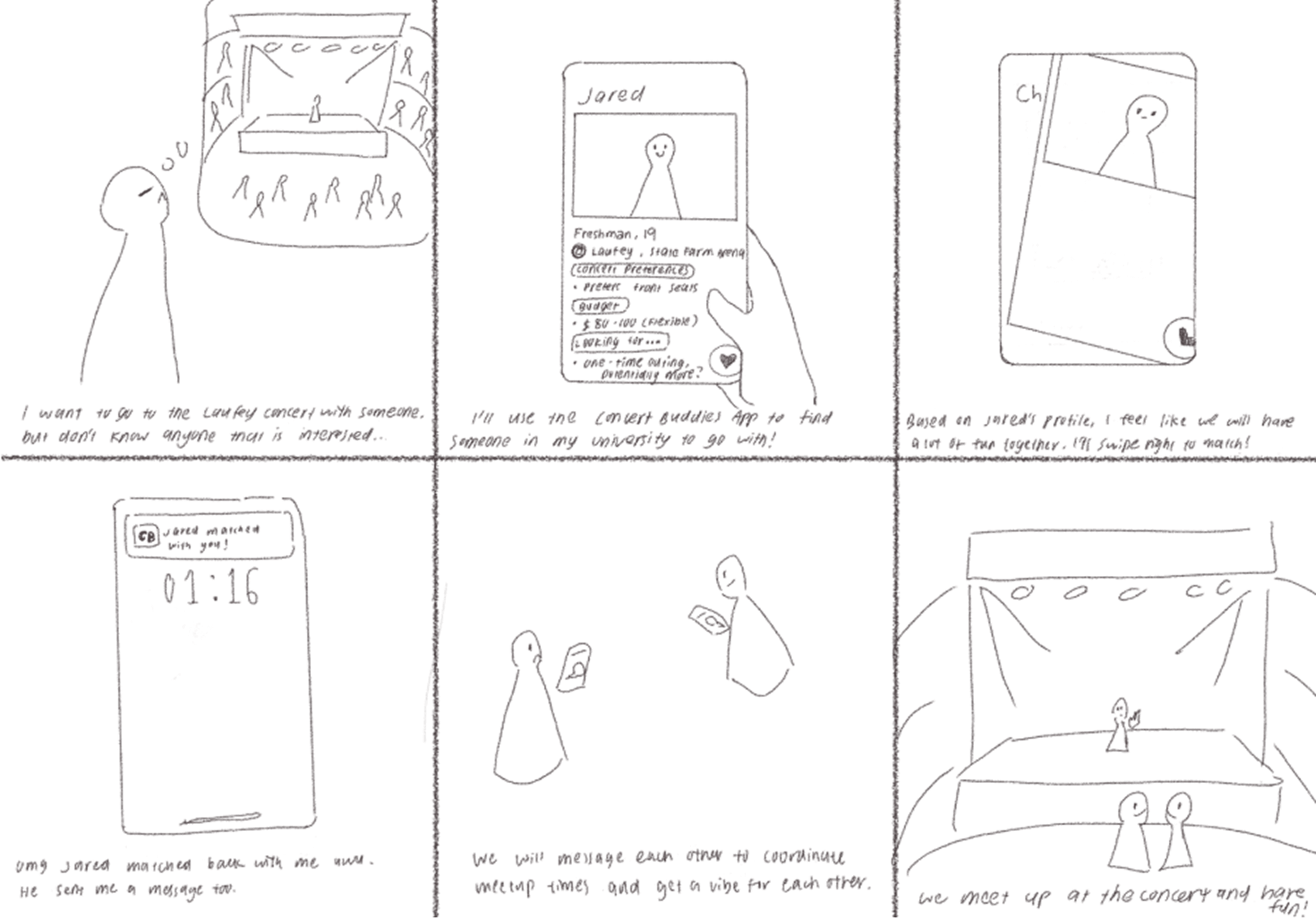
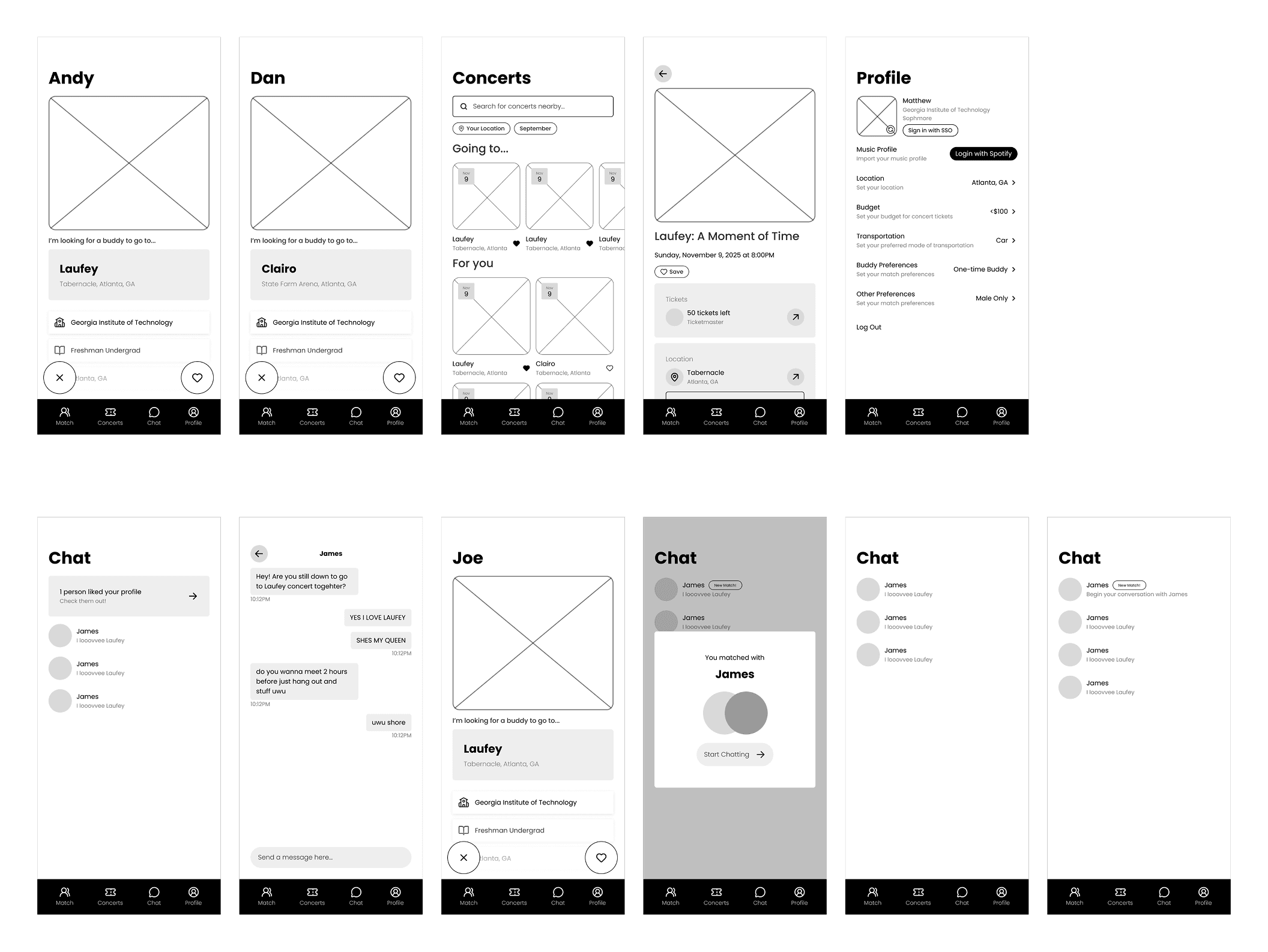
To explore how these elements would work in practice, we created storyboards and wireframes mapping the complete user journey.
01. storyboarding
02. wireframing
DESIGN ITERATIONS
01. profile detail view
users prioritized details about the person over music taste
Details about the person included information such as their profile picture, bio, age, location, etc. Music taste and statistics were secondary to this information. Users were more interested in getting to know the person before deciding to connect with them.

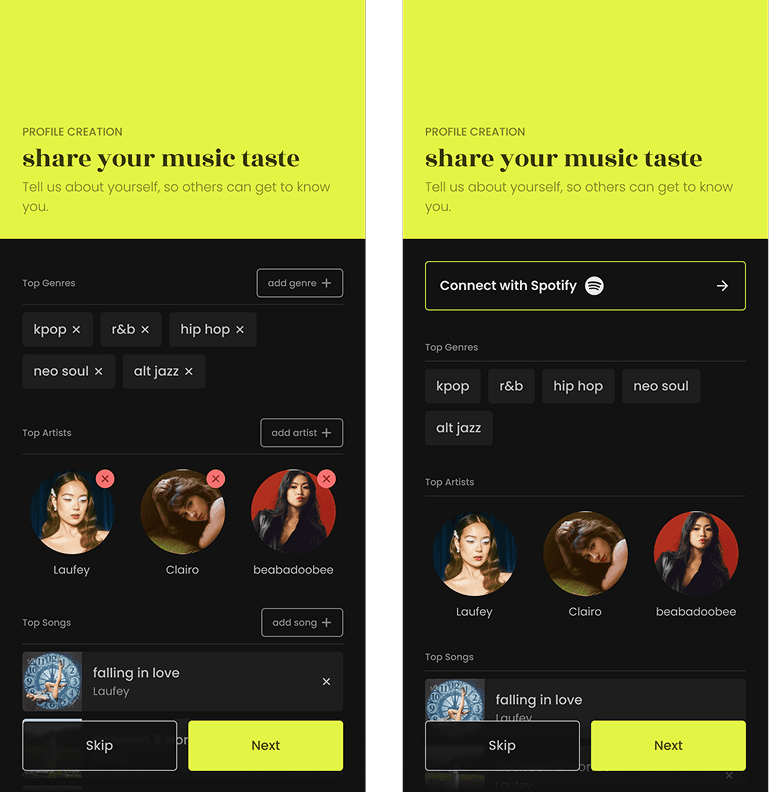
02. setting music taste profile
users equally preferred the ease of importing music from spotify and customization of their music profile
As a result, we allowed users the option to first import their music statistics from listening platforms like Spotify, then enabled them to edit those details if they feel they were not representative of their music taste.
FEATURE WALKTHROUGH
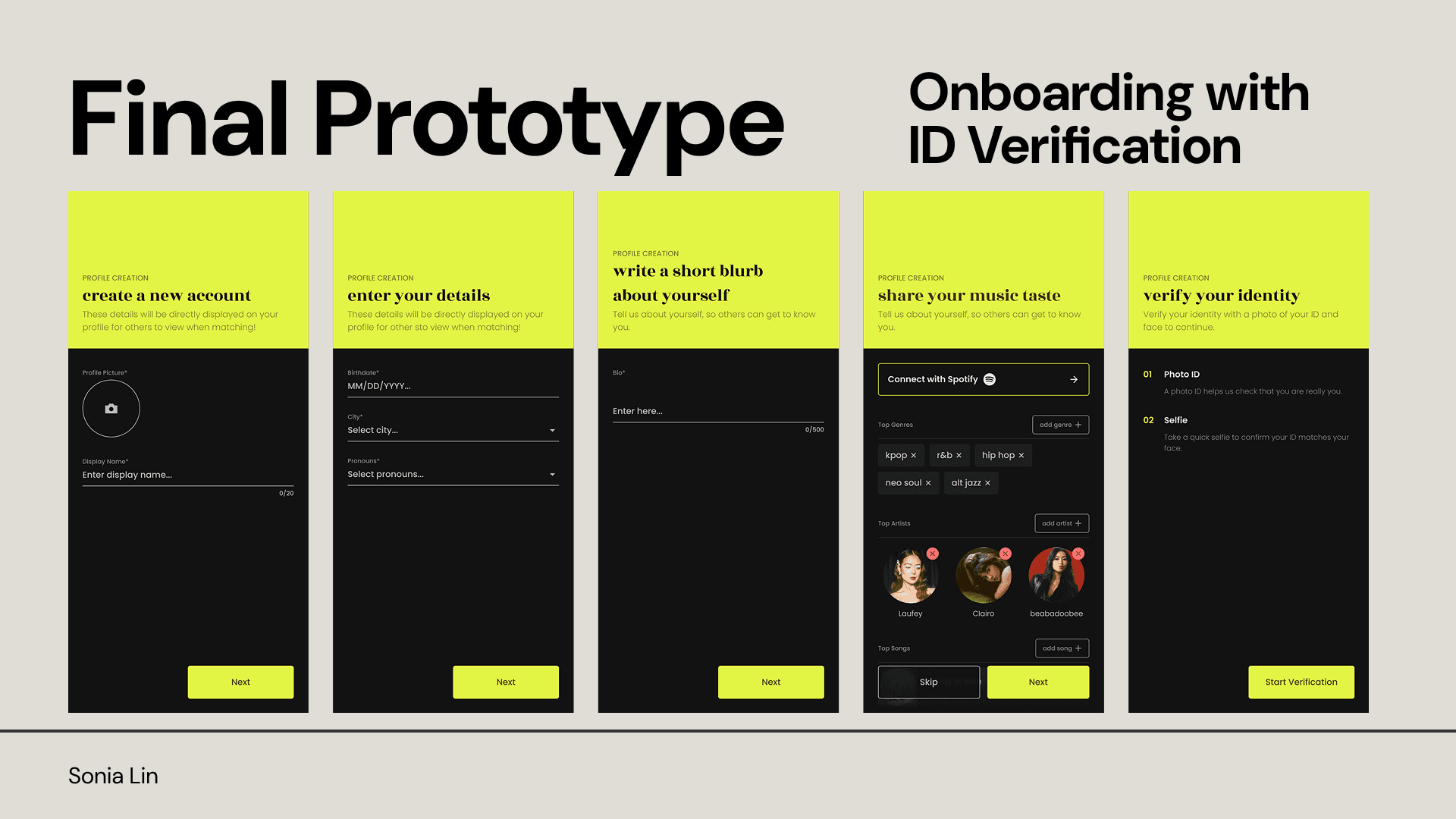 Onboarding
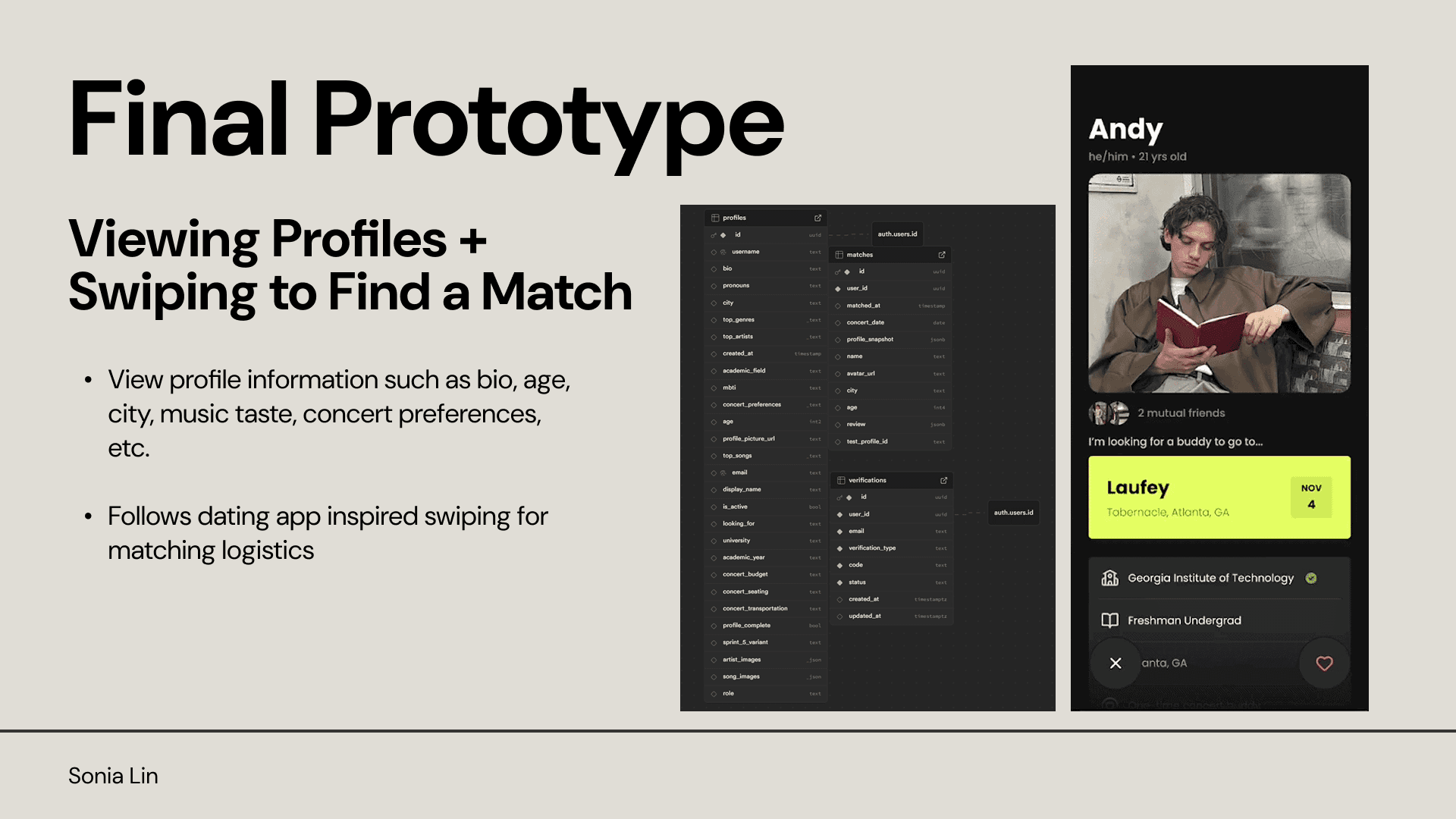 Matching
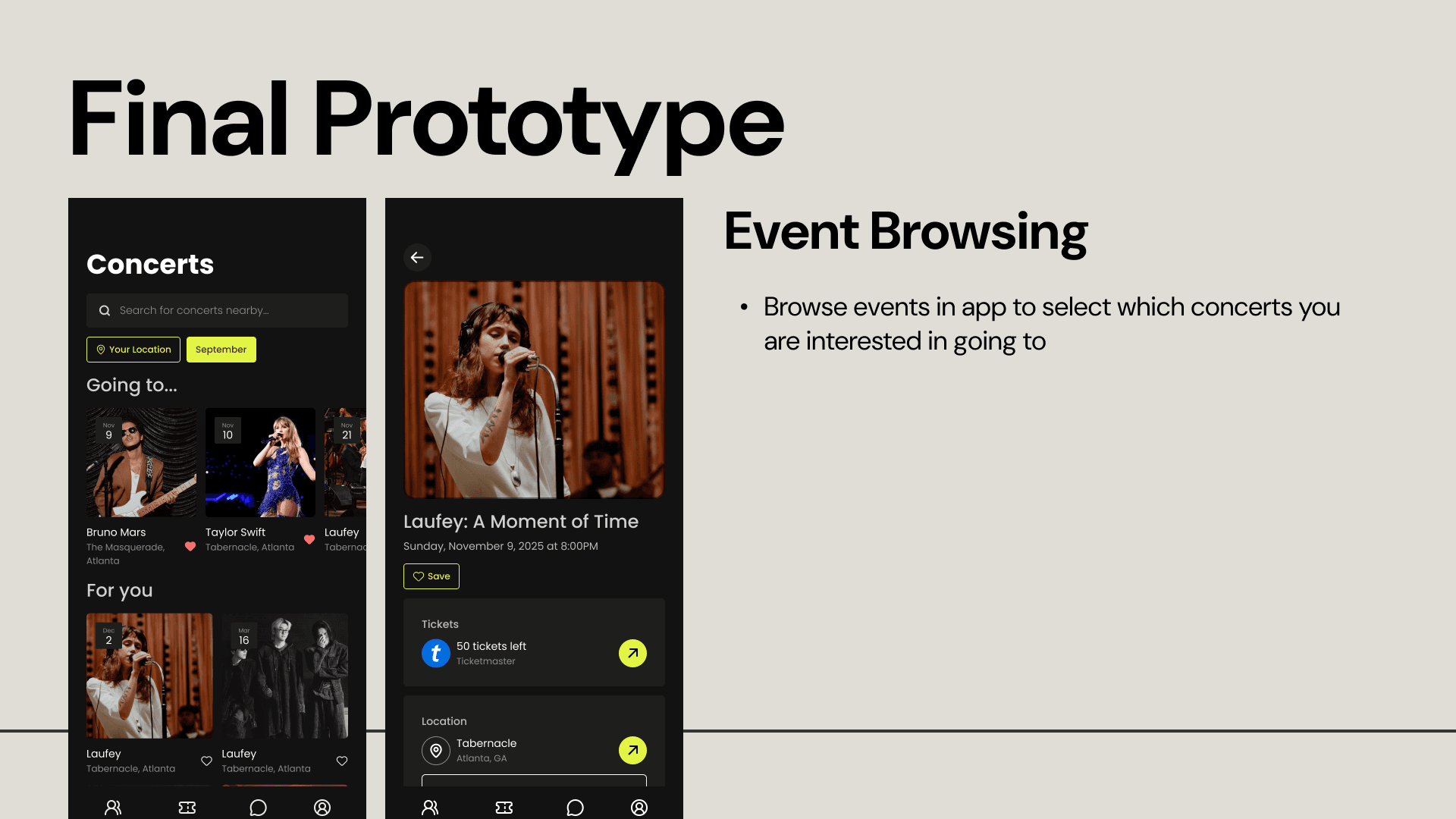 Event Browsing
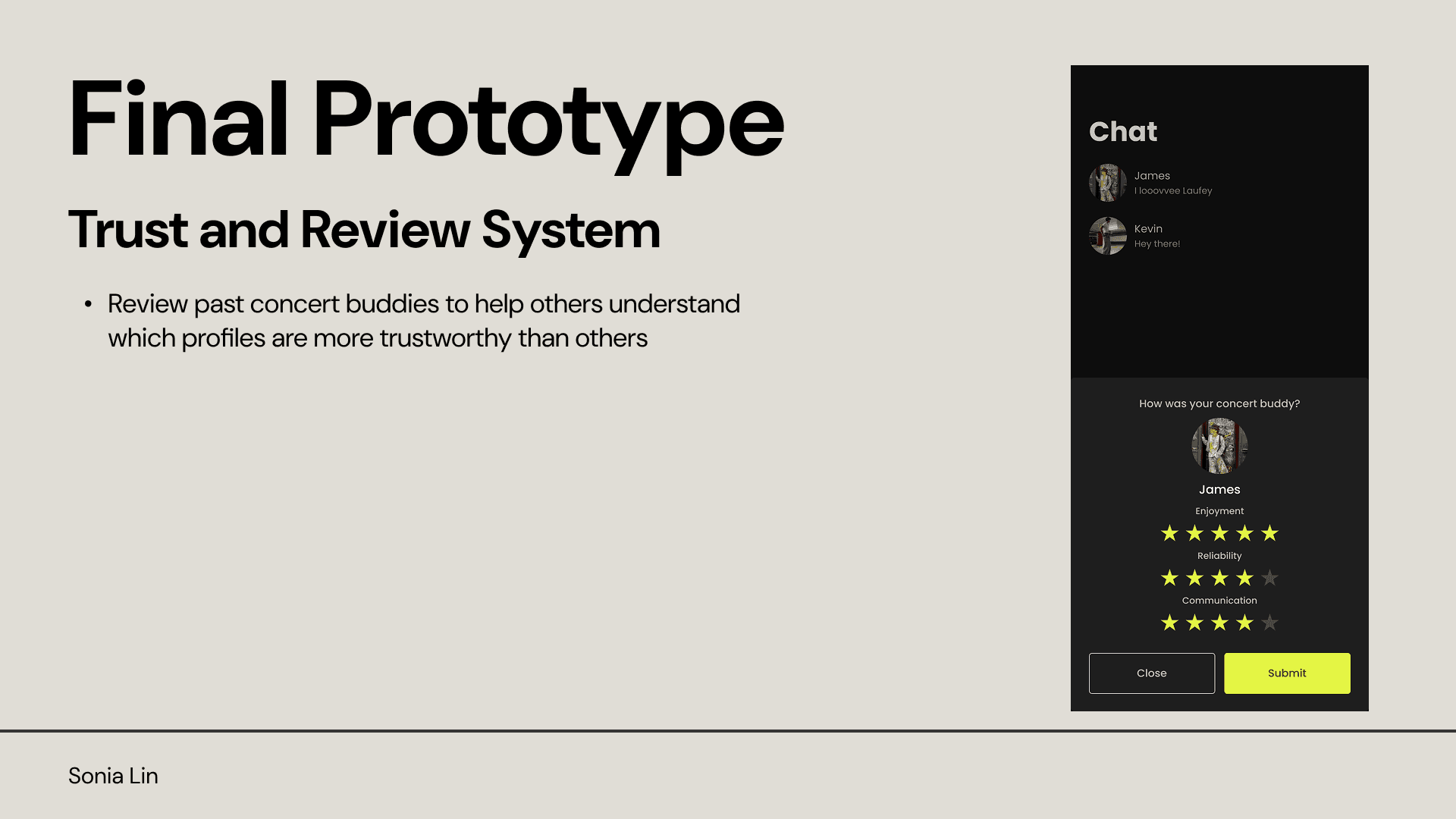 Trust & Review
IN PROGRESS
to be continued...